Insurance Council Declares Catastrophe as Victoria Bushfires Intensify
Rising Claims and Climate Concerns Amidst Widespread Fires
0
The information on this website is general in nature and does not take into account your objectives, financial situation, or needs. Consider seeking personal advice from a licensed adviser before acting on any information.
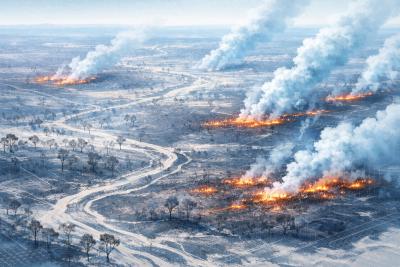
The Insurance Council of Australia (ICA) has declared an insurance catastrophe in response to the escalating bushfires across Victoria, underscoring the profound impact of climate change on the nation's insurance landscape.
Since January 7, bushfires have ravaged over 400,000 hectares of land, leading to a surge in insurance claims and raising alarms about the increasing frequency and severity of such events.
To date, insurers have received 2,369 claims encompassing residential properties, commercial assets, and motor vehicles. Preliminary assessments indicate that approximately 30% of property claims are total losses, where the cost of repairs exceeds the value of rebuilding. The catastrophe declaration is designed to expedite support for affected policyholders, ensuring prompt claims processing and the deployment of disaster response specialists.
Kylie Macfarlane, Deputy Chief Executive of the ICA, emphasized the urgency of the situation, stating, "These bushfires have been devastating for many communities across Victoria, and insurers' priority is getting help to people as quickly as possible." She encouraged residents and businesses to initiate claims processes even if they have not yet fully assessed the damage.
The current bushfire crisis is reminiscent of the catastrophic Black Summer fires of 2019-20, which burned over 10 million hectares in New South Wales and 1.5 million hectares in Victoria. Analysts warn that the compounding factors of heat, drought, and wind are creating conditions that can rapidly overwhelm firefighting efforts, leading to significant humanitarian and economic losses.
For Australian businesses, this situation highlights the critical importance of comprehensive insurance coverage and proactive risk management strategies. As climate-related events become more prevalent, ensuring adequate protection against such disasters is paramount. Businesses are advised to review their insurance policies, assess potential vulnerabilities, and implement measures to mitigate risks associated with natural catastrophes.
Please Note: We do not endorse any specific products or companies. Some content is sourced from third parties, including press releases, and may not be independently verified for accuracy or completeness.
The National Roads and Motorists' Association (NRMA) has raised concerns about Australia's crude oil supply, identifying it as a significant challenge amid ongoing Middle East conflicts. This situation has potential implications for transport costs and motor insurance exposures in the coming months. - read more
AustralianSuper, the nation's largest superannuation fund, has informed its members of impending increases in insurance premiums, set to take effect from May 30, 2026. This development is particularly noteworthy for those holding life, total and permanent disability (TPD), and income protection insurance through their superannuation accounts. - read more
Health insurers are calling on the Australian government to exempt low-income seniors, including those on the Age Pension, from the proposed changes to the Private Health Insurance Rebate. The concern is that requiring these individuals to pay hundreds of dollars more each year to maintain their private health insurance could lead some to downgrade their coverage or abandon it altogether. - read more
The International Union of Marine Insurance (IUMI) has recently highlighted the resilience of marine insurers in the face of escalating conflicts in the Middle East. Despite the challenging geopolitical landscape, insurers continue to provide essential coverage for cargo, hull, liability, and offshore energy sectors, ensuring that global trade flows remain protected. - read more